
Kerala has used the Centre's Rashtriya Swasthya Bima Yojana to the advantage of its government hospitals.

US hopes to learn from these innovative and dynamic programmes in India.

The government has decided to extend health insurance cover to sections such as rickshaw pullers, rag pickers, mine workers, sanitation workers, and auto rickshaw and taxi drivers.

The task force has favoured that Rashtriya Swasthya Bima Yojana should cover domestic workers, a Labour Ministry official said on Monday.

The government on Friday said it intended extending coverage of its flagship health insurance scheme for poor families to auto-rickshaw drivers, cycle rickshaw pullers, street vendors and rag-pickers.
The Brookings Institution, a think tank associated closely with the US administration, recently expressed keen interest in it.
The ruling coalition, which survived the confidence vote in Parliament on Tuesday, is aiming to cover 60 million households (or about 300 million people) across the country in the next five years under the Rashtriya Swasthya Bima Yojana, which it announced last year. Already, 300-odd patients insured under the scheme have availed of this facility in various listed hospitals in Delhi and Haryana.
Announcing this while presenting the Budget in Parliament on Monday, the Finance Minister Pranab Mukherjee said that Rs 350 crore, marking a 40 per cent increase over the previous allocation is being provided in the 2009-10 BE for this.
Apart from this, the health sector as a whole has an allocation of Rs 4,447 crore (Rs 44.47 billion). The finance Minister said the response for Rashtriya Swasthya Bima Yojana, which was operationalised last year, has been very good.
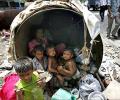
Beneficiaries to get hospitalisation cover up to Rs 30,000.
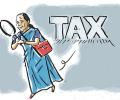
Net direct tax collection in the April-June quarter of the current fiscal rose by 41 per cent to Rs 3,54,569.74 crore, Minister of State for Finance Pankaj Chaudhary informed the Lok Sabha. During the April-June period of 2021-22, the government had collected a net direct tax of Rs 2,50,881.08 crore. At the same time, net indirect tax collection including Goods and Services Tax (GST) and custom duty increased by 9.4 per cent to Rs 3,44,056 crore as against Rs 3,14,476 crore in the first quarter of the previous fiscal, he said in a written reply.

Chaudhary also said that 66 per cent of government-sponsored health insurance schemes in the country are being run by the central government. "When the COVID-19 pandemic started, a decision was made for sale of all medicines at the GST rate between 5 and 12 per cent and the GST rate for COVID-19 related medicines and instruments has been reduced to five per cent," he said during the Question Hour.

For Swarup, the job would not be just challenging but also tricky, given the negativity attached to the sector.
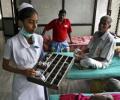
4,000 dialysis units to be set up across India, government working on providing free basic healthcare to BPL families.
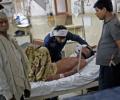
States are now gearing up to implement the scheme, integrating it with their own public health insurance plans and tying up the loose ends.
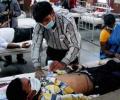
Government officials have lodged FIRs and slapped fines to the tune of Rs 1 crore on hospitals involved in frauds.

The change in policy for the three companies, from listing to merger, shows the level of discomfort within the government about their ability to take on the expanded load for insurance coverage with their current financial strength, including the massive premium and claim settlement cover under the proposed universal health coverage plan announced in Budget 2018.
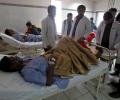
While Prime Minister Narendra Modi's Ayushman Bharat health care scheme is just a slogan for the moment, it is the state's Mukhyamantri Amrutum health assurance scheme which is a comforting reality for many.

Prime Minister Narendra Modi's idea of cooperative federalism is expected to be on display in the 2015-16 Budget.
Expect Modi to speak about internal security, terrorism, agriculture, the Triple Talaq Bill, the SC/ST Bill and, of course, the controversial NRC.

'The government is abdicating its responsibility on healthcare.' 'Just to start this scheme, it will take a minimum till October 2018 and elections are coming in 2019, so before that this can go into the dustbin.'
Increase of 10% to 12% likely in a bid to improve citizens' mood after demonetisation.

By April, operational guidelines for the scheme will be finalised and shared with states

The Congress on Sunday gave a call to party leaders in poll-bound states to work with unity to ensure victory that will 'set the tone' for 2024 Lok Sabha polls even as it showed willingness to forge an alliance of 'like-minded' parties.

The National Health Protection Scheme -- announced by the finance minister -- is aimed at benefiting 10 crore poor families by providing coverage of up to Rs 5 lakh per family per year.
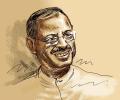
Anil Swarup, who conceived the Rashtriya Swasthya Bima Yojana -- a scheme the United Nations Development Programme and the International Labour Organisation recognised as among the finest -- speaks to Anjuli Bhargava.

Experts believe that states will be in a predicament because of their tight fiscal position and reluctance to replace their own health schemes with this newly announced National Health Protection Scheme.

All the poor people identified by the Socio Economic and Caste Census 2011 will be eligible for the scheme, officials said, adding that it will be linked to Aadhar but will not be a mandatory condition for availing the benefit.

EPF is the major vehicle for the long-term savings of organised private sector employees.

Ayushman Bharat aims at providing a cover of Rs 5 lakh per family annually and is aimed at benefitting more than 10 crore poor families across the country.
The budgetary allocation for the sector is Rs 60,908.22 crore, with Rs 6,400 crore earmarked for the centre's flagship health insurance scheme Ayushman Bharat- Pradhan Mantri Jan Arogya Yojna (AB-PMJAY).
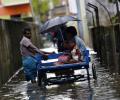
Some of the World Bank's suggestions to hold back the predicted tide of fresh poverty appear to run counter to the economic policies of Narendra Modi's government
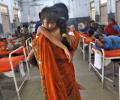
'If you look at household hospitalisation compensation, then you will find only one-third is hospitalisation. Two-thirds is outpatient.' 'Even if you provide Rs 5 lakh coverage, people will still have a tough time.'

Here's the full text of President Ram Nath Kovind's customary address to the joining sitting of Parliament on the first day of the budget session.
.jpg)
We present Prime Minister Manmohan Singh's full speech as he addressed the country on the occasion of 66th Independence Day, from Red Fort, Delhi.
